
wrist
There are two kinds of women on blood thinners. The paramedic who reaches you can tell which one you are in four seconds.
The pill keeps you alive. But on the day you can’t speak, it stays silent. Here’s the one thing almost no one is told at discharge — and why so many daughters still call every night just to hear their mother’s voice.

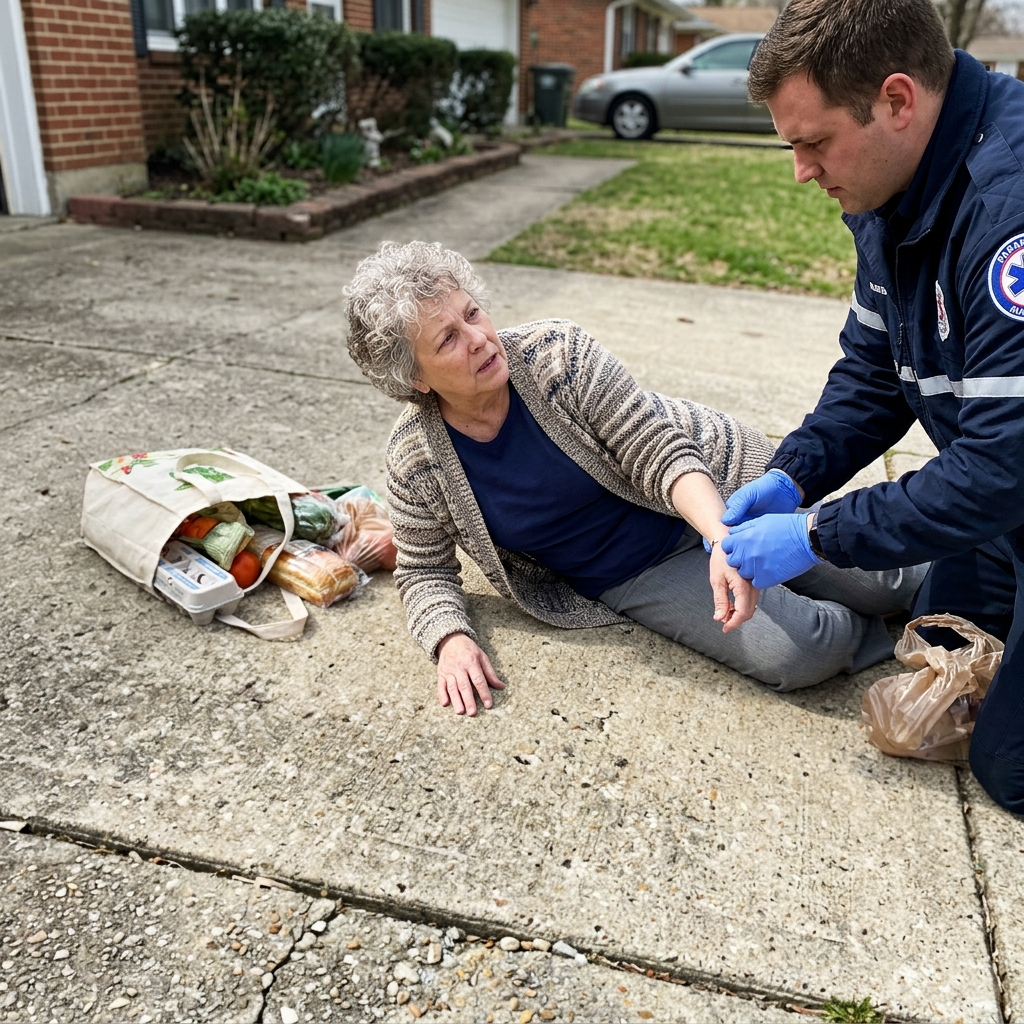
A few years ago we got a call for a woman in her late sixties. She’d tripped on the lip of her own driveway. Nothing dramatic. By the time we reached her she was confused and couldn’t answer us clearly. A neighbor had called it in. Her daughter was at work. Nobody there knew her history.
For most people, a fall like that is minor. But this woman was on a blood thinner — and a blood thinner changes everything about a head injury. The bleeding doesn’t stop the way it’s supposed to. What looks like a bump on the outside can be something very different underneath.
We didn’t know. Her phone was locked in her pocket. Her wallet had a card folded behind her insurance that we never saw until much later. There was nothing on her telling us the one fact that would have changed our very first decision.
She was one of the lucky ones. But I have never forgotten standing in that driveway, working on a woman whose most important piece of information was sitting eighteen inches away in a locked phone — completely useless to me.
The ones that scared me were the ones where we had to guess.
The information almost always exists. It’s just kept where we can’t reach it.
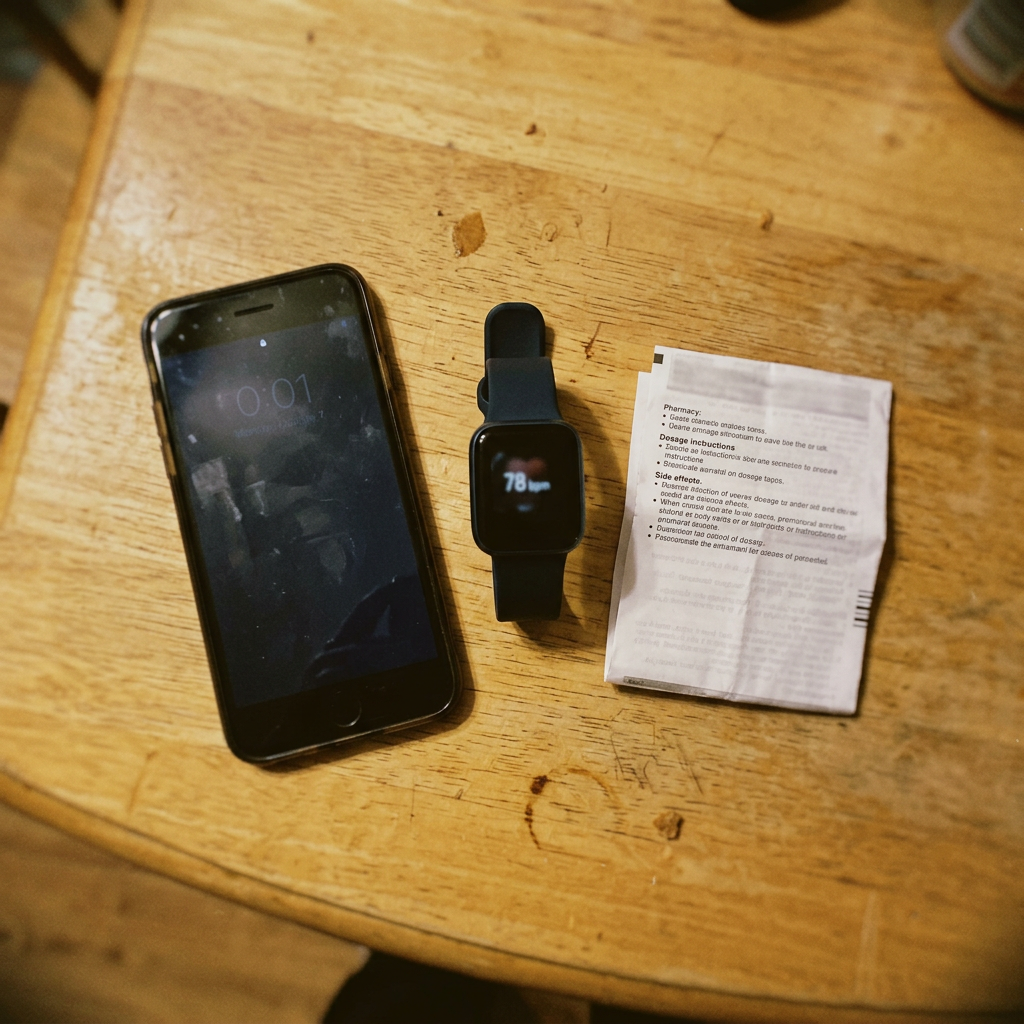
Here’s what breaks my heart every time. The patient knew perfectly well what she took. It just lived in exactly the wrong places:
We’re trained to check one place first: the wrist.
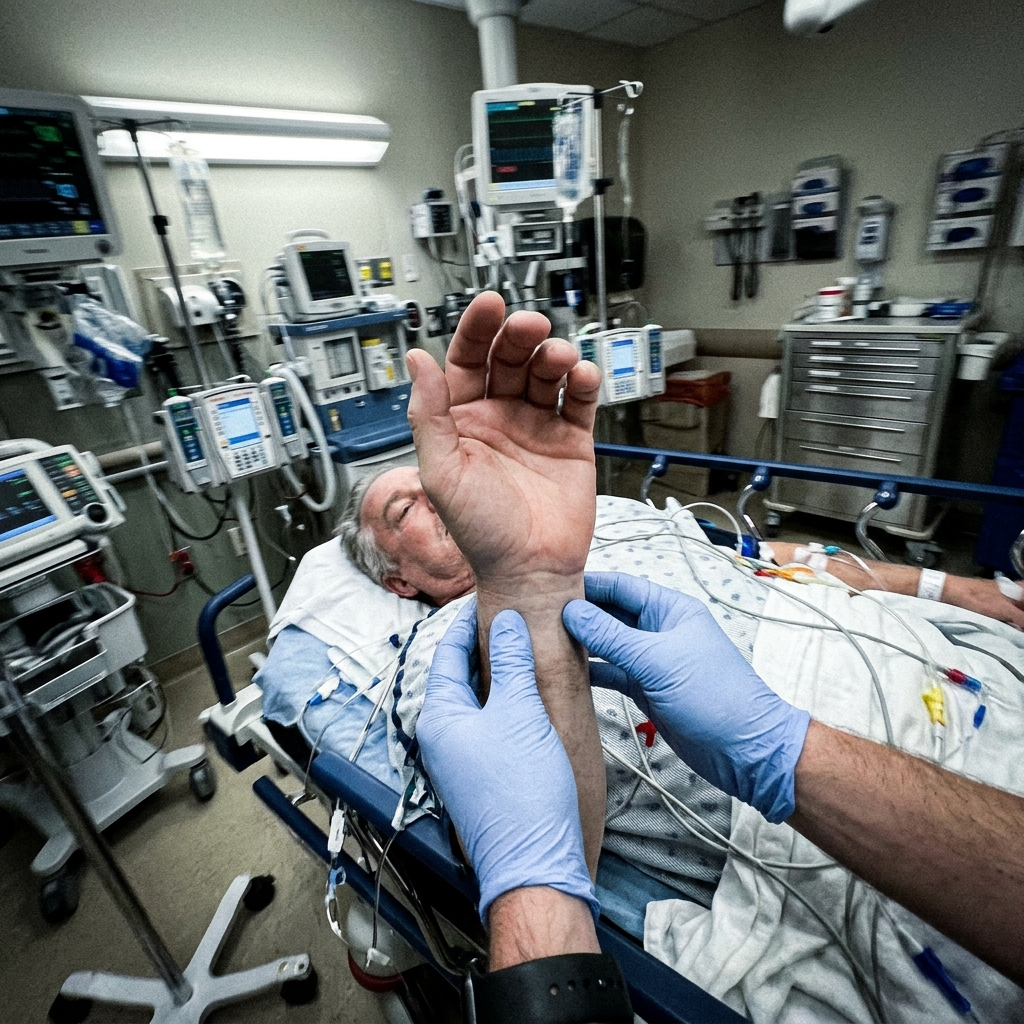
It isn’t a myth. It’s how nurses, paramedics and doctors are taught — a quick check for a medical ID, early, before almost anything else. Which means the whole problem collapses the moment you move the answer to where we already look.
Already engraved for blood thinners.

No choosing. No setup. The bracelet is already engraved for blood thinners, next to the medical symbol responders are trained to spot. When someone like me reaches you, it reads like the first line of your medical record before anyone can pull the real one.
It doesn’t look like a hospital band. That’s the whole point.

The old medical bracelets looked like something they clip on you in a hospital. Most women aren’t ready to wear a sign that says “sick” to the grocery store. This looks like something you’d wear anyway — clean steel that happens to carry the most important sentence about you. Nobody asks if you’re unwell. They ask where you got it.
How it works
It’s already engraved for blood thinners. Nothing to choose, nothing to set up.
On once, stays on — shower, sleep, garden, travel.
Responders see it in seconds, before they touch your phone.
It reads in seconds. No phone. No password. No battery.
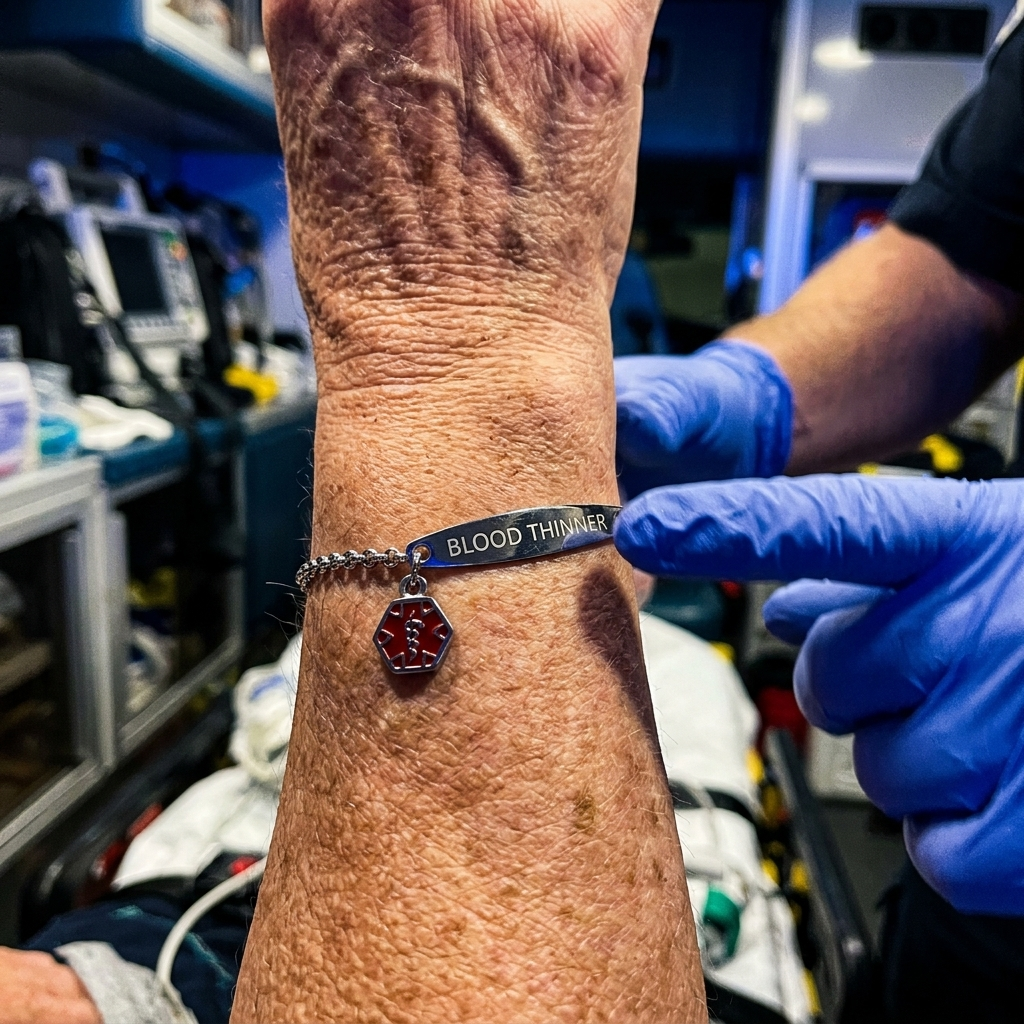
No app to open. No screen to unlock. No battery to die at the worst possible moment. It just sits there, quietly, doing the one job the pill in your pocket never could — telling the people trying to help you the thing that changes how they help.
“My family knows.” Your family isn’t always in the room — the fall on the front step when you’re alone, the moment at the store when you go quiet. Those are exactly what it’s built for. And the people who love you carry this worry whether they say it out loud or not.
“I’ll remember to tell them.” Only if you’re conscious and coherent. You don’t wear it for the days you can talk. You wear it for the day you can’t.
“Isn’t that a bit much?” Wearing a medical ID on a blood thinner has been standard cardiologist advice for a very long time. The only thing that changed is that this one doesn’t look medical.

So after that call, I started telling every blood-thinner patient I met the same thing — and then I did it myself. It goes on and it stays on. After the first week you forget it’s there, which is exactly the point. The best safety net is the one you never have to think about.
You’ve been managing this since the day of your diagnosis. The daily discipline. The caution. The quiet routine. This is the small part. The last thing on the list. The one that finally answers the question you’ve probably never said out loud:
If something happened and I couldn’t speak — would they know in time?
- Already engraved for blood thinners
- Matching wallet card — full list, allergies, emergency contact
- Free replacement in your first year if it’s ever lost
- 60 days to live with it — send it back for every cent
What readers said
Questions people ask
Isn’t the medical ID on my phone enough?
It’s a good feature — but it lives behind a locked screen, and no responder spends your critical minutes trying to guess a passcode. The bracelet can’t be locked.
Will it fit me?
The chain is adjustable to fit most wrists. The matching card covers anything that doesn’t fit on the steel.
What if I don’t like it?
You have 60 days. If it’s not right, send it back for every cent — no questions.
Is this a medical device?
No. It’s a medical-ID accessory that displays the information you choose to engrave. It supports but does not replace professional emergency care.
The pill keeps you alive.
The bracelet makes sure they know how to.
This bracelet is a medical-ID accessory that displays the information engraved on it. It is not a medical device and does not diagnose, treat, or prevent any condition. It supports but does not replace professional emergency care. Always follow your doctor’s guidance.
I put mine on and honestly forgot about it. My daughter stopped calling five times a day to check on me — that alone was worth it.
Bought one for my wife. It looks like a normal bracelet, which is the only reason she agreed to wear it.
The engraving is deep and clear. It came with the wallet card too. Simple, well made, and it gives me peace of mind I didn’t have before.
Got it for my mom who lives alone. This is the one thing off my mind now. Wish I’d found it sooner.